 CA | en

Blog Post
From Wood to Paper
Jul. 22, 2026
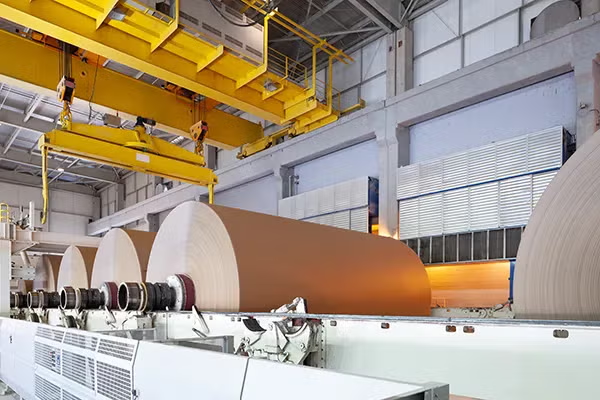
The world’s increasing hunger for paper is fed by a process invented some 2,000 years ago. Despite predictions that technology would create a paperless society, demand continues to rise, driven by packaging, publishing, hygiene products, and more. Paper remains uniquely versatile, tactile, and essential—and so are the pulp and paper mills that produce it.
History of Paper
Paper has its beginnings in the forest, and more than half of all forestland is found in Russia, Brazil, Canada, the United States, and China. Not surprisingly, these are also some of the countries that produce the most paper.
Though the ancient Egyptians inscribed hieroglyphics on thick sheets of papyrus, historians credit the Chinese servant Cai Lun with the spread and standardization of paper. In the years before Cai Lun, the Chinese wrote on silk, bone, and bamboo scrolls. But silk was prohibitively expensive, and bone and bamboo were heavy and difficult to transport.
In 105 A.D., Cai Lun presented his process to Emperor He: Mulberry bark, hemp, linen, and water were mashed to a pulp. The pulp was poured onto a wood-framed fabric screen that floated on water. The screen was lifted so the water could drain through the fabric, leaving the long plant fibers on the surface. The fibers, once dried in the sun, could be peeled off the fabric as one extremely thin, ready-to-use sheet of paper.
With the invention of the printing press around 1450, demand for paper skyrocketed, and mills appeared all over Europe. More than 200 years later, in 1690, the first mill opened in the New World in Philadelphia. In 1799, a French inventor developed the Fourdrinier machine, which thinned and smoothed the pulp on continuously moving assembly-line belts. A version of the Fourdrinier model is still used in most paper mills today.
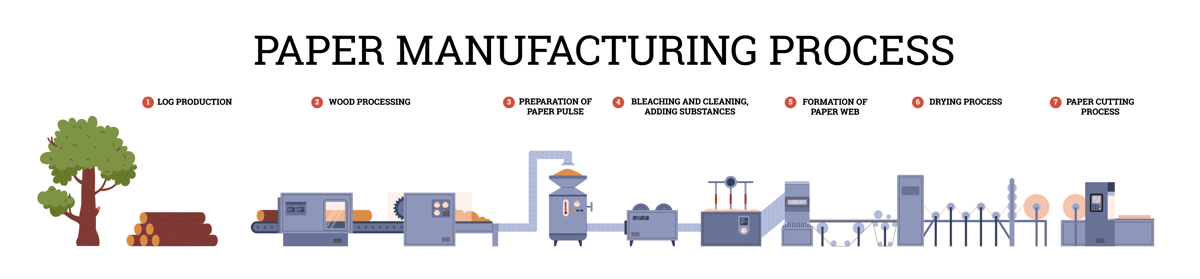
Illustration courtesy of iStock, Kudryavtsev Pavel
Papermaking
It all begins with harvested tree trunks, which are cut into 4- to 8-foot logs and then run through a debarking machine. Whirling blades in a chipping machine then cut the naked logs into 1-inch chips, which are either pumped through pipes or shipped to a nearby pulp mill.
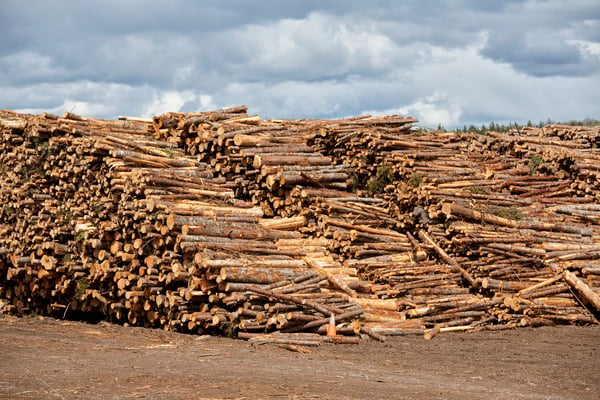 Piles of spruce logs waiting to be processed at a pulp and paper mill; Photo courtesy of iStock, onepony
Wood to Pulp
The purpose of pulping is to free the cellulose fibers from the rest of the wood. Wood is pulped using a highly efficient mechanical technique, a chemical technique, or a combination of the two.
About one-quarter of all pulping worldwide is done with a mechanical process, in which the wood is put into a “refiner” that grinds it between a rotating steel disk and a fixed plate. Though this method ensures high yields, it doesn’t get rid of much lignin, making the final product turn yellow or brown in the sun. Mechanical pulping is used mostly for newsprint or packaging papers.
Much more common is chemical pulping. In the chemical “kraft” process, wood chips are dumped in a vat of sulfuric acid and sodium chemicals, called a digester, and then pressure-cooked to remove about 90 to 95% of the lignin. The cooked pulp is then rinsed to remove the excess lignin and chemicals known as black liquor. At this stage, the remaining 5 to 10% of lignin makes the pulp brown. Chlorine dioxide, lye, and ozone, among other chemicals, are added to bleach it into a bright white.
At an integrated paper mill—one that creates both pulp and paper—the bleached pulp feeds directly into a paper machine. At a simple pulp mill, the dried pulp is cut into rectangular sheets, which are stacked and shipped off to a paper mill.
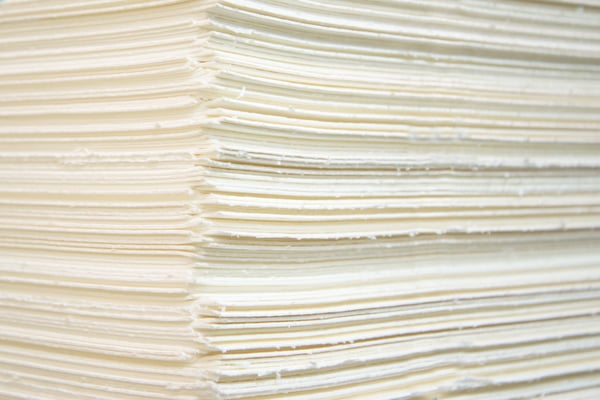 Pulp sheets ready for transport to a paper mill; Photo courtesy of iStock, pticelov
Pulp into Paper
Once delivered to the paper mill, pulp is first broken down in “pulpers” that hold thousands of gallons. These large vessels mix the pulp with up to 100 times its weight in water and then agitate the mixture with steel rotor blades.
The slurry is then piped to 1,500-gallon holding tanks where, depending on the type of paper desired, various chemicals may be added. Clay and chalk, for instance, are commonly used to adjust the paper’s final opacity. Starches are added to seal some papers, leaving the distinct stench of instant mashed potatoes.
The next stop is the paper machine. Once the pulp enters the machine, it doesn’t stop moving until it’s rolled up as a finished paper product. The belts move at a jogging pace, from about 575 feet per minute for an average-grade paper to more than 5,000 feet per minute on the fastest machines.
Machines come in all different sizes and work at varying speeds, but their fundamental mechanics are always the same. First, the pulp is watered down even more and pumped into what’s called a “headbox.” The headbox pushes the 1 to 1,000 pulp-to-water mix out through a horizontal slit and onto a moving belt of wire mesh. Water falls through the holes in the mesh, leaving the fibers aligned in a thin, wet sheet atop the wire.
The wet sheet then gets fed through a series of presses and then through heated iron cylinders for drying. The final paper product, made up of about 5% water, is rolled into 12,000-pound, 60-inch diameter reels that hold as much as 40,000 feet of paper. Most paper mills have machines on-site that cut the paper into rolls of various sizes or reams and then ship them off to their customers.
The fibers contained in new paper can be easily re-pulped and processed to make recycled paper. To recycle paper, the used paper must first be de-inked to remove contaminants such as inks, glues, even staples, and paper clips. Once that’s done, fiber can be dumped in the digester just as virgin wood chips are. The product, though, won’t be exactly the same. The extra processing slightly damages the fibers; each fiber can be recycled three to six times before it loses all strength.
For more articles exploring the world and its industries, revisit our Boss Magazine issues.
How Much Paper Comes from One Tree?
The short answer is, it depends—on the tree size, wood density, what process you’re using for pulping, and what kind of paper you’re making. On average, one tree produces around 8,000 sheets of paper, which is equivalent to 16 reams of copy paper.
Papermaking by the Numbers
Paper is made and used all over the world for various purposes. As of 2025, the top 10 paper producing countries are:
- China: 144.4 million tons
- U.S.: 76.1 million tons
- Japan: 26.5 million tons
- Germany: 25.4 million tons
- Republic of Korea: 23.1 million tons
- Brazil: 13.2 million tons
- Finland: 12.7 million tons
- Canada: 12.1 million tons
- Sweden: 11.0 million tons
- Italy: 9.9 million tons
Dixon Products for Paper Production
Details
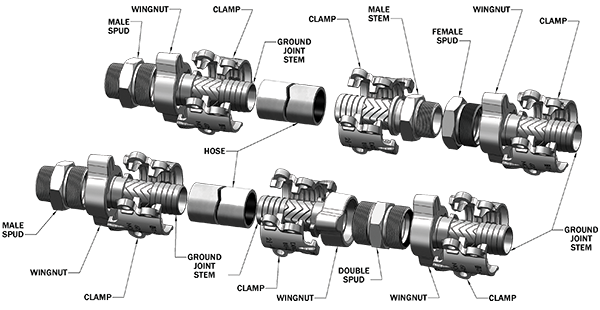
- Boss couplings supply a convenient threaded fitting to connect two lengths of hose, or a single length to a male or female threaded (NPT) outlet.
- The spud part of the coupling serves as one half of the connection and is usually fixed to the equipment. The stem part that is clamped to the hose is the other half. The two halves are connected or disconnected by rotating the wing nut onto the spud. When connected they achieve both a mechanical and a pressure seal.
 Details
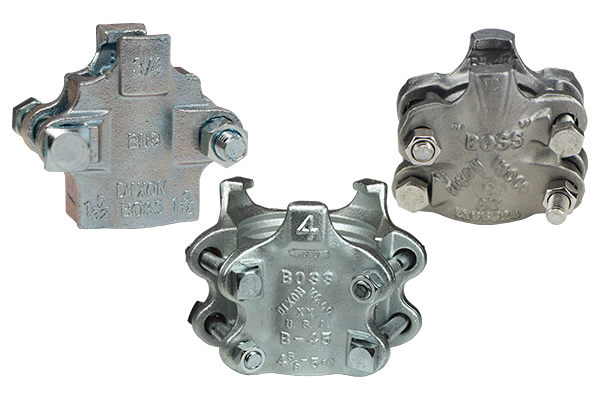
- 2, 4, and 6-bolt type
- 2, 3, 4, or 6-gripping fingers
- Recommended for steam service up to 450°F (232°C)
 Details
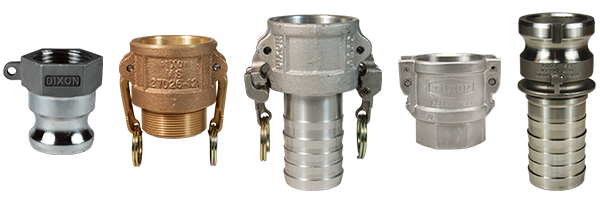
- Precision machined to rigid tolerances
- Durable stainless steel cam arm pins will not rust or bind, providing greater strength and safety
- Recess holds gasket firmly in place - ensures proper placement
- King Crimp shank design as well as traditional shank design for banding is available

Filters, Regulators, and Lubricators (FRLs)
 Details
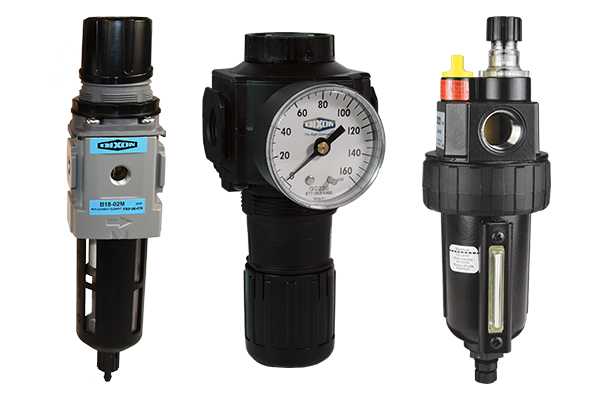
- Watts, Wilkerson, and Series 1 available
- 0.003, 0.01, 0.5, 1, 5, and 40 micron element filters
- Miniature, compact, standard, and jumbo options

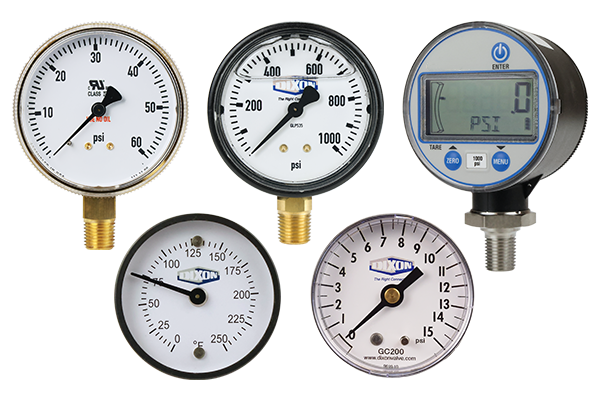 Details
- Dry and liquid-filled
- Lower and center back mounts
- Designed for long, reliable service under rugged conditions
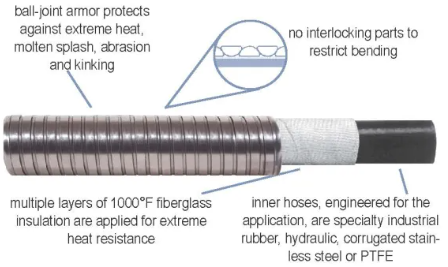 Details
- Available in 1/4” through 16” bore
- Lengths to 120’
- Heat resistant insulation to 1000°F (537.78°C)
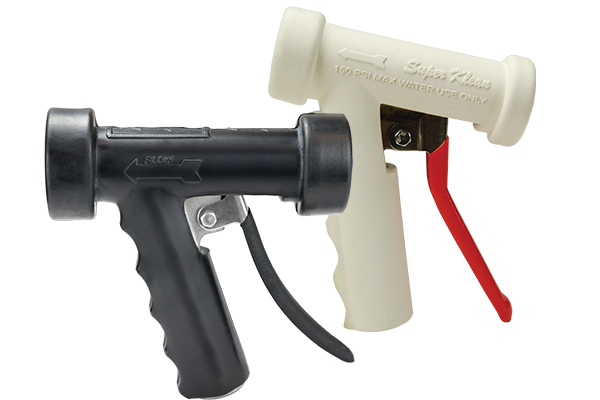 Details
- For low pressure cleaning (150 PSI)
- Standard (1/2” female NPT inlet) and lite (3/8” female NPT inlet)
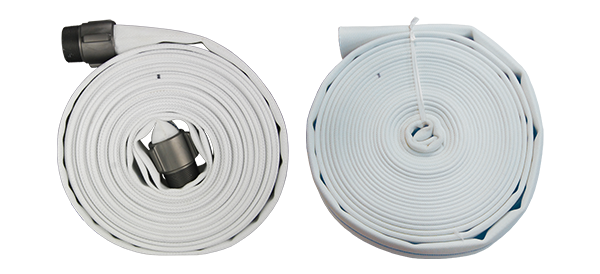 Details
- Ideal for open end discharge applications; not intended for firefighting service
- Single and double jacket, all polyester
- Coupled and uncoupled options
Summary
Paper remains one of the world’s most relied-upon materials, and its production is still rooted in the same fundamental steps developed centuries ago. Today’s mills execute that process at massive scale with high-speed machinery, precise chemical treatments, and rigorous quality control. Behind the scenes, reliable components play a critical role in keeping pulp and paper operations safe, efficient, and running around the clock.
For more information, visit dixonvalve.com or call 877.963.4966.
